

Exposiciones temporales actuales (IX)
Como os dije en la entrada anterior de exposiciones temporales, aquí tenéis la ampliación de algunas de las exposiciones que se encuentran aún en cartelera o se inaugurarán este mes de febrero. De todas ellas, tan sólo podré visitar una: la de Delacroix. ¡Qué ganas!
Delacroix (1798-1863)
15 de febrero - 20 de mayo de 2012
 La exposición reúne más de cien obras del gran pintor francés Eugène Delacroix (1798-1863), una de las figuras más destacadas del Romanticismo. Entre ellas, algunos de sus óleos más conocidos, como Grecia expirando sobre las ruinas de Missolonghi (Museo de Bellas Artes, Burdeos), uno de los bocetos de Muerte de Sardanápalo (Museo del Louvre, París) o Las mujeres de Argel en su aposento (Museo del Louvre, París), excepcionalmente prestada para la muestra. Esta exposición, organizada conjuntamente por la Obra Social "la Caixa" y el Museo del Louvre en el marco de un acuerdo de colaboración, es la más importante que se ha organizado en España en torno a la figura de Delacroix. Cuenta con préstamos de instituciones tan importantes como la National Gallery de Londres, el Metropolitan Museum de Nueva York o el Art Institute de Chicago. Se trata de un recorrido por las diferentes etapas de su producción, desde las primeras obras, que buscan la inspiración en el museo, hasta la etapa de madurez, en la que el artista extrae sus temas de la realidad, haciendo especial hincapié en sus obras de historia así como las orientalistas, reunidas por primera vez desde 1963, cuando el Museo del Louvre organizó una gran retrospectiva con motivo del centenario de su muerte.
Guggenheim (Bilbao)
Brancusi-Serra
8 de octubre de 2011 - 15 de abril de 2012
 Esta exposición, organizada en colaboración con la Fondation Beyeler, explora el significado de los conceptos de tiempo y espacio en la obra de Constantin Brancusi y Richard Serra, dos de los máximos exponentes de la escultura del siglo XX. Una selección de aproximadamente treinta esculturas de Brancusi, que se mostrarán en grupos temáticos, evidenciará aspectos esenciales de su obra, al tiempo que se enfrentará y dialogará con una treintena de obras del artista Richard Serra. En ambos casos se pondrá especial énfasis en el efecto producido por los diferentes materiales que emplean, ya sea el mármol, la madera, el cemento, el yeso o el bronce en el caso de Brancusi, o el acero, el caucho, el plomo o los tubos de neón en el de Serra. La presentación se realiza de forma yuxtapuesta, en ocasiones, o dedicando espacios individuales a cada uno de los creadores, poniendo de manifiesto sus similitudes y diferencias, y revelando el dinámico poder espacial de la escultura. La arquitectura de las dos sedes de la muestra juega un destacado papel, sumando una tercera voz a la selección de esculturas.
Fundación Mapfre (Madrid)
Odilon Redon (1840-1916)
11 de febrero - 29 de abril de 2012
A través de 170 obras procedentes de di
 stintas instituciones, que comprenden óleos, dibujos, grabados, paneles decorativos y bocetos textiles, la muestra recorre la trayectoria artística y el universo singular de Redon. Se trata de la primera exposición monográfica organizada en España en 20 años del pintor francés, precursor del simbolismo y del grupo de los Nabis. El estilo personal, con un uso novedoso del color y las tonalidades, y una temática basada en las complejidades del pensamiento, lo esotérico y los mecanismos del sueño, fueron lo que hicieron que Redon influyera profundamente en las generaciones simbolistas, fauvistas y Nabis, convirtiéndose en uno de los pintores más destacados de la segunda mitad del siglo XIX y principios del XX. La exposición está comisariada por Rodolphe Rapetti, investigador del Institut National d'Historie de l'Art de París, y cuenta con la asesoría científica de Fred Leeman, ambos reconocidos expertos de la obra de Odilon Redon. Entre las instituciones que han colaborado con esta muestra destaca el Musée d'Orsay, el Gemeentemuseum de La Haya, el Museo Van Gogh y el Rijksmuseum de Ámsterdam, el Museo de Bellas Artes de Burdeos y el Staatliche Kunsthalle de Karlsruhe, así como de importantes colecciones extranjeras.
Thyssen-Bornemisza (Madrid)
Mondrian, De Stijl y la tradición artística holandesa
7 de febrero - 6 de mayo de 2012
 Coincidiendo con la celebración de su 20 aniversario, el Museo Thyssen-Bornemisza pone en marcha una nueva actividad expositiva que, con el título genérico de Miradas cruzadas, presentará periódicamente una novedosa instalación temporal de obras procedentes de sus colecciones. Para inaugurar el ciclo, a partir del 7 de febrero y coincidiendo también con ARCO 2012 dedicado este año a los Países Bajos, la muestra Mondrian, De Stijl y la tradición artística holandesa propondrá un diálogo visual entre las pinturas de Piet Mondrian y sus colegas Theo van Doesburg y Bart van der Leck, con algunas obras maestras del Siglo de Oro holandés. Esta confrontación permitirá apreciar la proximidad conceptual entre el arte de los miembros de De Stijl y la tradición artística holandesa, que comparten una misma visión utópica de la pintura.
Thyssen-Bornemisza (Madrid)
Chagall
14 de febrero - 20 de mayo de 2012
 Organizada por el Museo Thyssen-Bornemisza y la Fundación Caja Madrid, y comisariada por Jean-Louis Prat, presidente del Comité Chagall, esta exposición será la primera gran retrospectiva dedicada al artista ruso en España y, como principal objetivo, destacará el gran papel que su obra ocupa en la Historia del Arte. Las salas del Museo Thyssen-Bornemisza expondrán trabajos de sus primeros años y de su periodo en París, la capital de la vanguardia en ese momento; también se recogerá su experiencia en la Rusia revolucionaria y en Francia, hasta llegar al exilio forzado en Estados Unidos en 1941. En las salas de exposición de la Fundación Caja Madrid la atención se centrará en el período americano y en su evolución artística posterior; se insistirá en los asuntos bíblicos que preocupaban al artista y en su relación con los poetas contemporáneos, además de presentar distintas obras de escultura, cerámica y vitrales.
Centro de Arte Canal (Madrid)
Da Vinci. El genio
6 de diciembre de 2011 - 2 de mayo de 2012
 En el Centro de Arte Canal, de la plaza de Castilla, puedes ver la exposición DaVinci, El Genio, donde junto a algunos dibujos originales del artista del Renacimiento, se presentan más de 60 reproducciones de sus máquinas, las cuales el visitante puede manipular. En las 19 salas de la exposición de Da Vinci en Madrid, que coincide en fechas con la de pinturas de Da Vinci en la National Gallery de Londres, hay un primer ámbito dedicado al Da Vinci más íntimo, donde puedes ver manuscritos y dibujos originales del artista. Entre estos dibujos destaca el estudio de la Batalla de Anghiari, una gran pintura mural que en su día estuvo en las paredes del Palazzo Vecchio de Florencia. El segundo espacio está dedicado a la pintura, y en el se ven pinturas de discípulos de Leonardo Da Vinci, tanto italianos como españoles. Entre ellas destaca una copia de La Ultima Cena, de Giampetrino, que llegará desde la Royal Academy of Arts de Londres en el mes de febrero. Entre las obras de discípulos españoles, se pueden ver dos cuadros de Fernando de Yáñez de la Catedral de Cuenca, Piedad y Adoración de los Magos, recientemente restaurados. En la exposición de Da Vinci tienes también la posibilidad de ver la película en 3D, Leonardo Da Vinci, la mirada del genio, realizada expresamente para la muestra, en la que se propone un paseo por la obra del artista, mezcla de arte y ciencia.
Neue Pinakothek (Múnic)
George Stubbs
26 de enero - 6 de mayo de 2012
 The English animal painter George Stubbs (1724-1806) is the most prominent representative of so-called 'sporting art' that reached its peak in the 18th century as a result of the growing enthusiasm for horse breeding, racing and hunting, as an occupation for the prosperous upper classes. His work largely comprises portraits of thoroughbreds and their jockeys, of dogs and hunting scenes. With his subtly balanced and sometimes bold compositions Stubbs developed a classical style using subjects derived entirely from contemporary life. In the Anglo-Saxon world, George Stubbs has long been regarded as one of the greatest artists of his time and, alongside William Hogarth and Thomas Gainsborough, as the most important artist of the 18th century. The Neue Pinakothek, which has a first-rate collection of English painting from the 18th and 19th centuries and boasts the only painting by George Stubbs in Germany, is staging the first exhibition on this artist to be held on the Continent. A selection of thirty paintings, mostly from collections in England, will be complemented by drawings and prints that underline the artist's far-reaching influence in the field of animal painting in France and Germany.
Museum für Moderne Kunst (Frankfurt)
Warhol: Headlines
11 de febrero - 13 de mayo de 2012
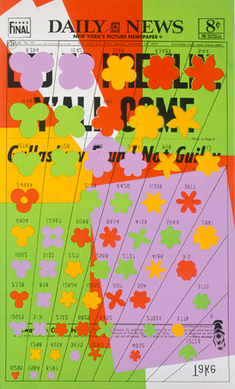 From 11 February to 13 May 2012, the MMK Museum für Moderne Kunst will present a unique Andy Warhol exhibition such as has never been seen before: Warhol: Headlines. For the first time, the MMK is bringing together from international collections all of the eighty Andy Warhol works influenced by contemporary tabloids and other mass media. Warhol: Headlines is the first exhibition dedicated to the theme of headlines in the oeuvre of Andy Warhol. The objects to be shown –paintings, drawings, prints, photographs, sculptures, and videos– shed light on the artist’s memorable treatment of the ambivalent character and sensationalism of contemporary media. Above all during the nineteen-sixties, Warhol –one of the most important artists of the twentieth century– directed his attention towards trivial subjects from popular culture, and he collected clippings as well as press photos from daily newspapers, film booklets, and handbills. His preoccupation with the printed media occupied a prominent place in his artistic production and, for the first time, is now being comprehensively examined and adequately appreciated through this exhibition. The show elucidates how he extracted such fundamental themes as celebrities, death, catastrophes, and current events from the media and sharpened their depiction in his works. His interest was directed not only towards the endlessly reproducible mechanisms of the mass media, but also the opinion-moulding reports themselves with their luridly formulated headlines.
Musée Eugène-Delacroix (París)
Fantin-Latour, Manet, Baudelaire: the Hommage à Delacroix
7 de diciembre de 2011 - 19 de marzo de 2012
 It was 1863: the year Manet sparked a scandal with his Déjeuner sur l’herbe, and the year of Delacroix’s death. Shocked by the lack of official recognition, for the next Salon, Fantin-Latour created his Hommage à Delacroix. This seminal painting brought together a generation of innovative artists and critics, such as Baudelaire, around a portrait of the dead master. The exhibition traces the journey of the painting and tells the story of the artistic fraternity through other portraits of the artists shown in the painting and the works tying them to Delacroix’s legacy. The exhibition focuses on the creative brotherhood formed by the personalities depicted, with a number of works revealing cross-influences between these figures and others inspired by Delacroix’s particular legacy. In addition, it addresses the question of group portraits of artists and views of their studios as meeting places, beginning with that of Frédéric Bazille, once situated in an adjoining building. The exhibition concludes with the official homage to the artist by the sculptor Aimé-Jules Dalou, together with the decidedly exceptional one by Paul Cézanne, a remarkable tribute to Delacroix as the first French progressive modernist.
Louvre (París)
New Frontier: American Art Enters the Louvre. Thomas Cole and the Birth of Landscape Painting in America
14 de enero - 16 de abril de 2012
 The Musée du Louvre, the High Museum of Art (Atlanta), Crystal Bridges Museum of American Art (Arkansas), and the Terra Foundation for American Art have announced the launch of a four-year collaboration devoted to American art. The first presentation of the “New Frontier” partnership is centered on Thomas Cole (1801–1848) and the rise of American landscape painting. In 1975 the Louvre acquired The Cross in the Wilderness, the Louvre’s only painting by Thomas Cole, which represents the culmination of the artist’s reflection, initiated in 1825, on the representation of a certain type of American landscape, both untouched and grandiose. Inspired by the sentiments expressed in contemporary American literature by writers such as James Fenimore Cooper and William Cullen Bryant, the works of Cole and those of his compatriot Asher B. Durand initiated a particularly new and fertile genre in the young school of American painting. In addition to the painting from the Louvre, five works drawn from the collections of the partner institutions have been selected for the inaugural presentation. These include the Landscape with Figures: A Scene from “The Last of the Mohicans” (Terra Foundation for American Art) painted by Cole in 1826 and considered one of the artist’s first masterpieces.
Musée de l'Orangerie (París)
Debussy, la musique et les arts
22 de febrero - 11 de junio de 2012
 Claude Debussy est sans conteste le compositeur du tournant du XIXe siècle qui trouva l'essentiel de son inspiration dans le domaine de la poésie contemporaine et des arts visuels. D'emblée, il s'intéressa aux artistes les plus novateurs, aux figures les plus en marge des académismes en cours. L'exposition propose d'évoquer les rencontres majeures du musicien avec les artistes et poètes de son temps, évoqués notamment par les collections de trois familles amies qui le soutinrent dans les années difficiles qui précédèrent la création de Pelléas et Mélisande : celle du peintre Henry Lerolle (1848-1929), du compositeur Ernest Chausson (1855-1899) et d'Arthur Fontaine (1860-1931), conseiller d'Etat. En ces milieux où le raffinement, le goût et la simplicité excluent toute mondanité, le musicien pouvait admirer des œuvres de Degas, Renoir, Vuillard, Gauguin, Camille Claudel, Maurice Denis, Redon, Bonnard, Carrière, Puvis de Chavannes. Des tableaux, dessins et pastels seront accompagnés de lettres et photographies de ces artistes, d'éditions originales de Gide, Louÿs et Valéry, de manuscrits de Chausson et Debussy.
Tate Britain (Londres)
Picasso and Modern British Art
15 de febrero - 15 de julio de 2012
 Picasso remains the twentieth century’s single most important artistic figure, a towering genius who changed the face of modern art. In a major new exhibition at Tate Britain, Picasso and Modern British Art explores his extensive legacy and influence on British art, how this played a role in the acceptance of modern art in Britain, alongside the fascinating story of Picasso’s lifelong connections to and affection for this country. It brings together over 150 spectacular artworks, with over 60 stunning Picassos including sublime paintings from the most remarkable moments in his career, such as Weeping Woman 1937 and The Three Dancers 1925. It offers the rare opportunity to see these celebrated artworks alongside seven of Picasso’s most brilliant British admirers, exploring the huge impact he had on their art: Duncan Grant, Wyndham Lewis, Ben Nicholson, Henry Moore, Francis Bacon, Graham Sutherland and David Hockney. Picasso and Modern British Art is the first exhibition to trace Picasso’s rise in Britain as a figure of both controversy and celebrity. From his London visit in 1919, working on the scenery and costumes for Diaghilev’s ballet The Three Cornered Hat; to his post-war reputation and political appearances; leading up to the phenomenally successful 1960 Tate exhibition.
Royal Academy of Arts (Londres)
David Hockney RA: A Bigger Picture
21 de enero - 9 de abril de 2012
 The Royal Academy of Arts presents the first major exhibition of new landscape works by David Hockney RA. Featuring vivid paintings inspired by the East Yorkshire landscape, these large-scale works have been created especially for the galleries at the Royal Academy of Arts and are shown alongside related drawings and film. 'David Hockney RA: A Bigger Picture' spans a 50 year period to demonstrate Hockney’s long exploration and fascination with the depiction of landscape. New work that dates from 2005 captures the beauty of the changing seasons, the cycle of growth and the journey that Hockney has taken through his beloved landscapes in Yorkshire. The exhibition also reveals how Hockney has embraced new technology, including his early use of the Polaroid, his innovative use of the colour photocopier, and more recently his iPhone and iPad. The exhibition includes a display of his iPad drawings and a series of new films produced using 18 cameras, which are displayed on multiple screens and provide a spellbinding visual journey through the eyes of David Hockney.
Scottish National Portrait Gallery (Edimburgo)
Romantic Camera: Scottish Photography & the Modern World
1 de diciembre de 2011 - 3 de junio de 2012
 The opening masterpiece exhibition of the new Photography Gallery highlights some of the greatest works in the National Galleries of Scotland photography collection. It explores questions of identity, specifically the close relationship between romanticism and photography in Scotland. Over 60 works are included, ranging from iconic images by Adamson and Hill to new acquisitions being shown for the first time. Romanticism emerged as a literary form in the 1790s and had a powerful impact on Scottish culture, particularly through the influence of the poet and novelist Sir Walter Scott. Photography in Scotland was born in Scott’s shadow and was profoundly shaped by his creative imagination. Characterised by nostalgic longing, photographers hunted out traces of Scotland’s turbulent history or ranged across the landscape in search of poetic subjects. Looking back to photography’s origins, the craft basis of the medium was increasingly emphasised, downplaying its function as an industrial technology. During the twentieth century, romanticism in photography was forged in opposition to the passage of modernity: the shock of global war or unsettling urban change. Of no fixed political form – sometimes radical, more often conservative – it has also been a source of collective self-scrutiny, particularly during Scotland’s cultural renaissance in the 1980s. Romantic identification may, indeed, be a defining feature of the history of Scottish photography, passed down from generation to generation and a vital aspect of lens-based media today.
Scottish National Portrait Gallery (Edimburgo)
War at Sea
1 de diciembre de 2011 - 31 de octubre de 2012
 Featuring rarely-seen paintings from the Imperial War Museum, this exhibition is devoted to the art of Sir John Lavery and shows the conflict of the First World War through the eyes of a war artist. Explore the story of how the two greatest navies in the world fought an epic battle on the North Sea. Experience Scapa Flow in the depth of winter and see the great battleships on the Firth of Forth, and the airfields, shipyards and munitions factories geared up for war. Sir John Lavery (1856-1941) was born in Belfast. He moved to Ayrshire when he was ten and after training at art schools in Glasgow and Paris, he became associated with the group of up-and-coming artists known as The Glasgow Boys. By the outbreak of the First World War in 1914 Lavery was already established as a very fashionable and successful portrait painter.
The Frick Collection (Nueva York)
Renoir, Impressionism, and Full-Length Painting
7 de febrero - 13 de mayo de 2012
 The Frick Collection presents an exhibition of nine iconic Impressionist paintings by Pierre-Auguste Renoir, offering the first comprehensive study of the artist's engagement with the full-length format, which was associated with the official Paris Salon in the decade that saw the emergence of a fully fledged Impressionist aesthetic. The project was inspired by La Promenade of 1875–76, the most significant Impressionist work in the Frick's permanent collection. It explores Renoir's portraits and subject pictures of this type from the mid-1870s to mid-1880s. Intended for public display, these vertical grand-scale canvases are among the artist's most daring and ambitious presentations of contemporary subjects and are today considered masterpieces of Impressionism. On view only at the Frick, Renoir, Impressionism, and Full-Length Painting is a landmark exhibition, bringing together several beloved masterpieces from around the world.
Metropolitan (Nueva York)
The Steins Collect. Matisse, Picasso, and the Parisian Avant-Garde
23 de febrero - 3 de junio de 2012
 Gertrude Stein, her brothers Leo and Michael, and Michael's wife Sarah were important patrons of modern art in Paris during the first decades of the twentieth century. This exhibition unites some two hundred works of art to demonstrate the significant impact the Steins' patronage had on the artists of their day and the way in which the family disseminated a new standard of taste for modern art. The Steins' Saturday evening salons introduced a generation of visitors to recent developments in art, particularly the work of their close friends Henri Matisse and Pablo Picasso, long before it was on view in museums. Beginning with the art that Leo Stein collected when he arrived in Paris in 1903—including paintings and prints by Paul Cézanne, Edgar Degas, Paul Gauguin, Henri de Toulouse-Lautrec, Édouard Manet, and Auguste Renoir—the exhibition traces the evolution of the Steins' taste and examines the close relationships formed between individual members of the family and their artist friends. While focusing on works by Matisse and Picasso, the exhibition also includes paintings, sculpture, and works on paper by Pierre Bonnard, Maurice Denis, Juan Gris, Marie Laurencin, Jacques Lipchitz, Henri Manguin, André Masson, Elie Nadelman, Francis Picabia, and others.
Metropolitan (Nueva York)
The Game of Kings. Medieval Ivory Chessmen from the Isle of Lewis
15 de noviembre de 2011 - 22 de abril de 2012
 In 1831, a hoard of luxury goods—including more than seventy chess pieces and several other objects, all made of carved walrus ivory and dating from the twelfth century—was unearthed on the Isle of Lewis off the west coast of Scotland. The chess pieces (thereafter known as the Lewis Chessmen), which come from at least four distinct, but incomplete sets, are arguably the most famous chess pieces in the world today, and are among the icons of the collections of the British Museum in London and the National Museum of Scotland in Edinburgh. For this exhibition, more than thirty chessmen from the collection of the British Museum are being shown at The Cloisters, the branch of The Metropolitan Museum of Art devoted to the art and architecture of medieval Europe. This represents the first time such a large ensemble of the chessmen has traveled outside the United Kingdom. After the showing in New York, they will return to London.
MOMA (Nueva York)
Diego Rivera: Murals for The Museum of Modern Art
13 de noviembre de 2011 - 14 de mayo de 2012
 Diego Rivera was the subject of MoMA’s second monographic exhibition (the first was Henri Matisse), which set new attendance records in its five-week run from December 22, 1931, to January 27, 1932. MoMA brought Rivera to New York six weeks before the exhibition’s opening and gave him studio space within the Museum, a strategy intended to solve the problem of how to present the work of this famous muralist when murals were by definition made and fixed on site. Working around the clock with two assistants, Rivera produced five “portable murals”—large blocks of frescoed plaster, slaked lime, and wood that feature bold images drawn from Mexican subject matter and address themes of revolution and class inequity. After the opening, to great publicity, Rivera added three more murals, now taking on New York subjects through monumental images of the urban working class and the social stratification of the city during the Great Depression. All eight were on display for the rest of the show’s run. The first of these panels, Agrarian Leader Zapata, is an icon in the Museum’s collection.
National Gallery (Washington)
The Baroque Genius of Giovanni Benedetto Castiglione
29 de enero - 8 de julio de 2012
 Giovanni Benedetto Castiglione (1609—1664) was perhaps the most complex and far-reaching interpreter of the baroque, the naturalistic style that dominated 17th-century European art. This exhibition presents the National Gallery's rich holdings of the artist's prints and drawings while suggesting, for the first time, the complex sources of his style, including Rembrandt and Claude Lorrain, as well as its importance for later artists, from Tiepolo and Piranesi to Watteau and Boucher. Organized according to themes and concerns in his work—biblical journeys, the memory of the antique, the Flight into Egypt, religious nocturnes, fantastic physiognomy, and graphic experiment—the exhibition presents Castiglione's works and comparative examples side by side, underscoring the serial aspect of his creativity. The installation includes approximately 80 works, most from the Gallery's collection but including a number of important drawings from private collections.
Hermitage (Amsterdam)
Rubens, Van Dyck & Jordaens. Flemish painters from the Hermitage
17 de septiembre de 2011 - 16 de marzo de 2012
 From 17 September 2011 to 16 March 2012, the Hermitage Amsterdam presents a stunning selection from the Flemish art collection of the Hermitage in St. Petersburg. With 75 paintings and about 20 drawings, this definitive survey includes numerous masterpieces by the three giants of the Antwerp School - Peter Paul Rubens, Anthony van Dyck, and Jacob Jordaens -accompanied by the work of well-known contemporaries. Peter Paul Rubens (1577-1640) will be a special focus of the exhibition, represented by 17 paintings and many drawings. Rubens was the most accomplished and influential Flemish painter of the seventeenth century. At the same time, he was known as a charming aristocrat, diplomat, and collector, and his workshop was a smoothly operating business. It is the first time that this superb collection is shown in the Netherlands. Many of these paintings were acquired by Catherine the Great in the eighteenth century. They belonged to world-class collectors such as Pierre Crozat and Heinrich von Bruhl, whose collections Catherine purchased in their entirety.


 Entradas

